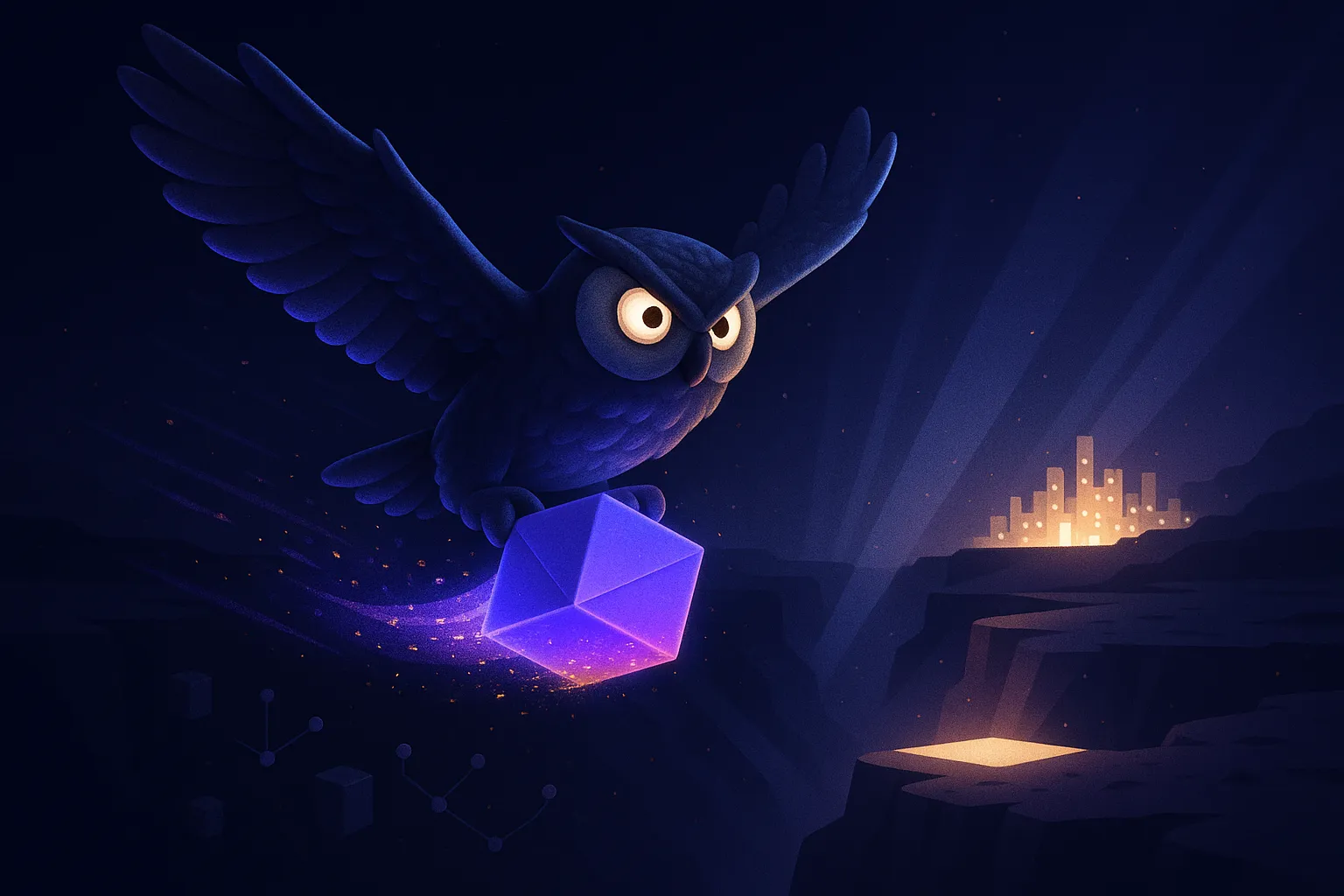
There’s a cliff in every AI-built project. On one side is the demo — fast, impressive, the part that fits in a screen recording. On the other side is production — a real deployment, a real domain, real users, and a codebase you can actually keep. Most builds fall into the gap between. By one 2026 estimate, only about half of AI prototypes ever make it to production at all.
Two new capabilities in the OwlMeans Platform are built to carry you across that gap — and to make sure that what lands on the other side is yours:
- One-click production deployment — a real, hardened, live deployment on your own domain.
- GitHub for every project — your code, in your repository, with full history and safe rollback.
Together they close the loop OwlMeans has been promising all along: describe it as user stories, get production-grade software, and walk away owning every line.
Go live for real — not “live-ish”
Until now, the app you watched the pipeline build lived in a preview environment — perfect for iterating, not for customers. The new production workload changes that. It’s a separate, stable deployment that serves your real users and doesn’t churn while you keep editing. You can keep refining in preview all day; production only changes when you say so, with an explicit Publish.
And it’s production in the way that actually matters:
- Hardened, not just “deployed.” Production runs prebuilt, optimized artifacts — no preview machinery, no source maps shipped to the public, locked-down runtime. The thing your customers hit is built for customers.
- Separate production secrets. Your live credentials live in their own isolated set. Preview keys never leak into production, and vice-versa — a boundary you’d otherwise have to design and enforce yourself.
- Its own users. Production gets its own identity, with its own end users, cleanly separated from the throwaway accounts you used while testing. (That’s the built-in identity system doing its job on the production side.)
This is exactly the work the “technical cliff” is made of — deployment, configuration, secrets, hardening — handled by the pipeline instead of becoming your second job.
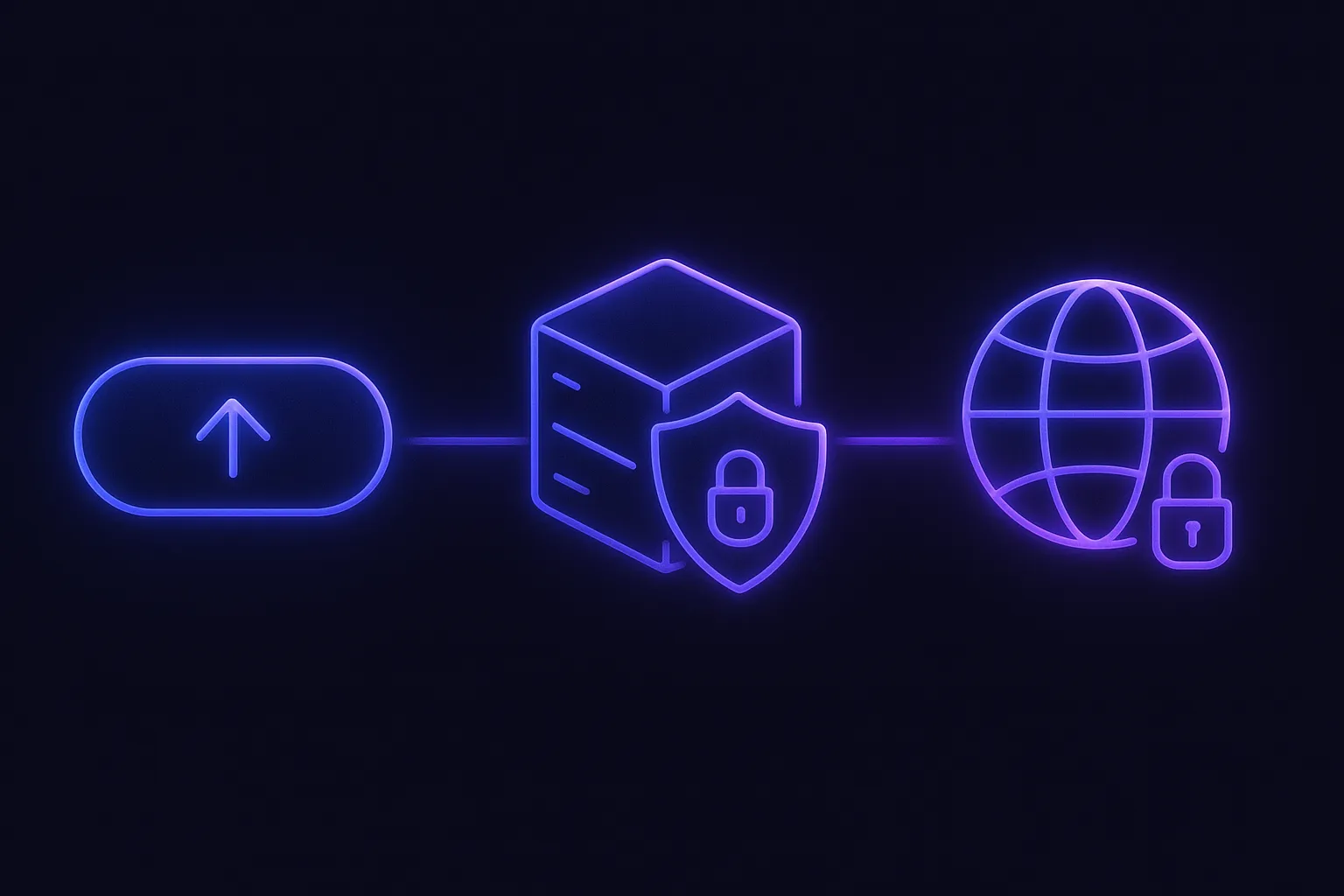
On your domain, with your name on it
A product on someone else’s subdomain looks like a project. A product on your domain looks like a company.
Every production deployment gets a generated hostname out of the box — and when you’re ready to put your own brand on it, you attach a custom domain by pointing a CNAME at it. TLS is handled. No support ticket, no ops engineer, no waiting on us — the owner does it, and it works. Your app, your domain, your customers’ trust.
Your code lives in your GitHub
Here’s the part that matters most for the long run, and the part that defines OwlMeans against every prototype tool: you own the code, and now it lives where code belongs — in your GitHub.
“Do I actually own what this thing built?” is the anxiety of AI development in 2026. The whole market has converged on the same answer — export to GitHub — because builders learned the hard way that a brilliant app trapped inside a vendor’s editor is a liability. OwlMeans was designed around ownership from the start; this makes it tangible:
- Every project is a real git repository from its very first commit — the generated code and the design documents the pipeline writes alongside it, all versioned.
- Connect any GitHub account and create or link a repository in a couple of clicks. It’s per-project, so different products can live under different accounts.
- Push and pull from the platform UI, both directions. Edit on the platform and push; edit in your own IDE or with another coding agent and pull — the preview rebuilds around your changes. No lock-in, no one-way door.
- A full commit history with safe rollback. Browse what changed and roll back to any point. And it’s safe by construction: there is no force-push anywhere — the control simply doesn’t exist — and rollbacks are append-only, so you can undo a change without ever destroying history.
There’s one more touch builders will appreciate. After an open-ended “free-flight” AI task — the kind where you ask for something and let the pipeline work — OwlMeans shows you exactly what changed and offers to commit it or roll it back. You’re never guessing what the AI did to your codebase. You decide, every time, with the diff in front of you.
Run it anywhere
Because you own the code and the code is in your repo, you’re never tied to our cloud either. An app you export can be self-hosted on your own infrastructure — and it’ll still authenticate its users against OwlMeans identity, with the platform handing you the exact configuration to drop into a self-hosted environment. Deploy with us for the easy path; take it and run it elsewhere whenever you want. The choice stays yours.
A quick look under the hood
Business value first — but for the curious, here’s the shape of it.
The production workload is a separate, hardened deployment that mirrors the preview environment minus the live-edit machinery: it runs prebuilt artifacts, non-root, on a read-only filesystem, with its own database volume, its own secrets, and its own identity client. Configuration is scoped so production and preview values can never bleed into each other. Custom domains route through a CNAME pointed at the generated production host.
Git is a first-class service inside every project slot. Commits are automatic at the right moments and proposed after free-flight work; the GitHub connection uses standard OAuth. Two decisions carry the safety guarantees:
- History is sacred.
main-only, no branching gymnastics, no force-push, and rollback implemented as a forward revert commit — so a push after a rollback is always an ordinary fast-forward. You cannot accidentally rewrite or lose history. - Your token never touches the project’s disk. The GitHub credential is encrypted at rest and only ever travels over the platform’s signed internal channel — never written into files, git config, or process arguments inside your app’s container.
The complexity lives in the pipeline. You get a Publish button and a connected repo.
Why this matters
OwlMeans has always said a coding agent is a coding agent — not a software development team, and that the team’s real job is turning capable generation into production-grade software you own. Production deployment and GitHub are where that stops being a slogan.
The cliff between prototype and product is where most AI builds quietly die. OwlMeans now carries you across it — to a hardened deployment, on your domain, backed by your repository, with your users and your code firmly in your hands. Ship it for real. Own it completely. Keep building with any agent you like.
OwlMeans is an AI development pipeline: describe what you want as user stories and get full-stack apps, chatbots, AI agents, and data pipelines — typed, SSO-ready, and yours to keep building with any agent. See what it can do →